Our Story
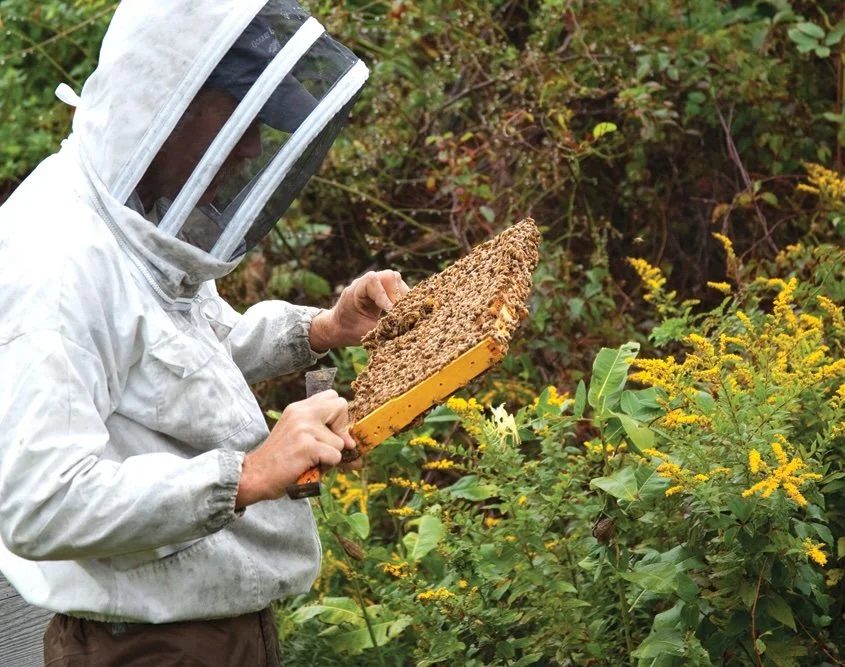
Littlefield Bee Farm has been part of Block Island since 1984. Chris and Sue Littlefield built the farm together in its early years, and today Chris carries it forward, still keeping bees the way this island calls for: slow, attentive, and mostly out of their way.
Chris learned beekeeping from a local apprentice who worked under Stanley Pratt, the island's longtime apiarist. When the hives needed a new caretaker, Chris and Sue took them on together, and what started as six hives grew from there. That early groundwork, Sue's included, is still the foundation everything is built on.
That hands-on experience sits alongside real scientific training. Chris spent two decades in coastal marine conservation, developing science-based strategies to protect and restore Rhode Island's coastline. Understanding a fragile system well enough to work with it, not against it, is the same instinct natural beekeeping asks for.
The approach is simple. Minimal intervention, natural methods, and a lot of trust in what the bees already know how to do. In return, the island gives back something you won't find anywhere else: honey shaped by what actually grows here. Milkweed, blackberry blossom, shad bush, wild apple, marsh rose, aster, wild strawberry, and goldenrod, all within a few miles of the hive.
That's the whole story. No large farms, no imported nectar, no shortcuts. Just decades of experience and what this one small island produces in a season.
You'll find Chris at the Farmers Market, honey in hand.
How The Bees Are Kept
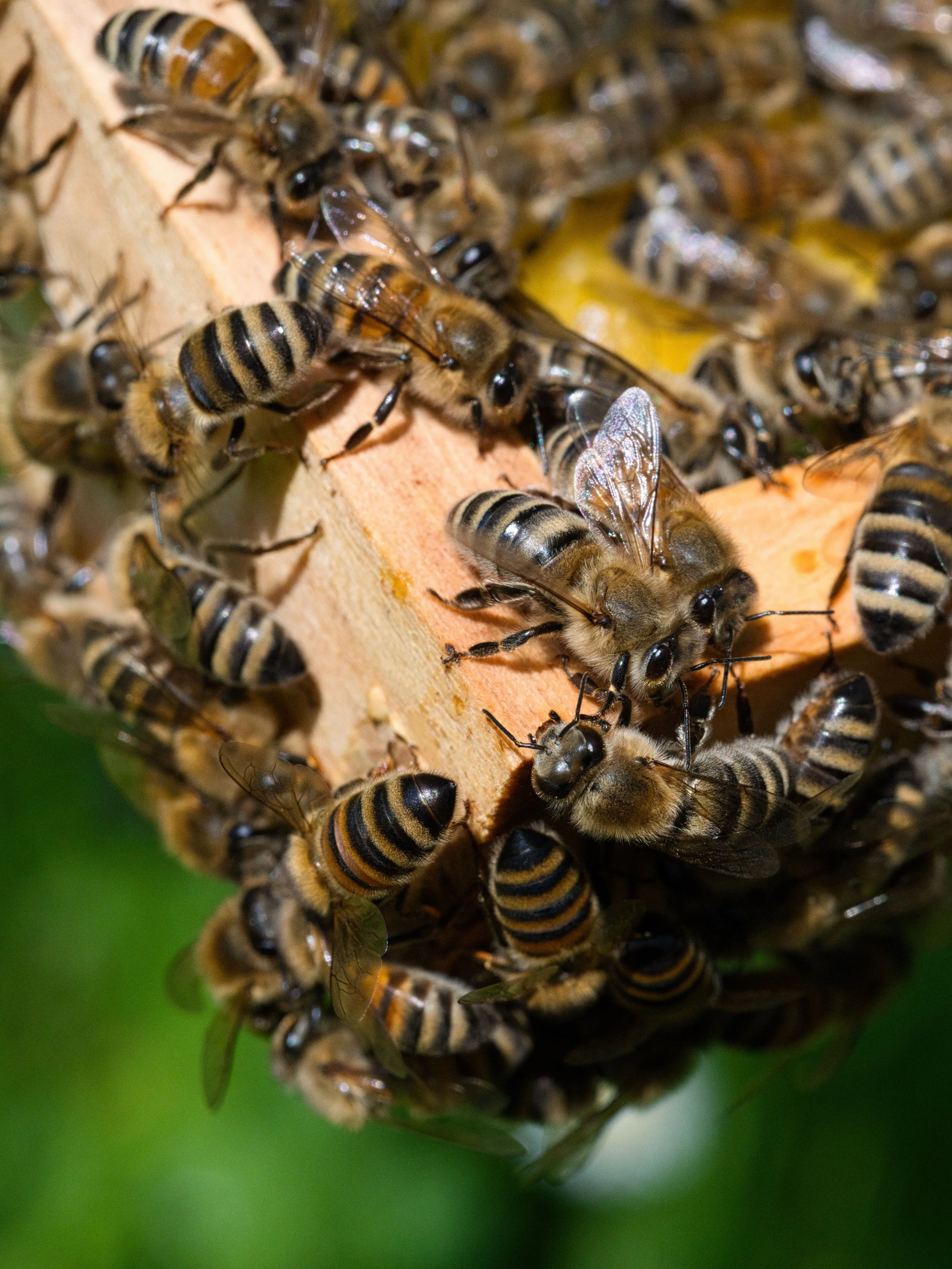
Chris runs the hives with as light a hand as possible. Rather than pushing the bees toward maximum output, the colonies are left to build, forage, and manage themselves the way they would in the wild, with only the intervention needed to keep them healthy.
That restraint shows up most clearly at harvest time. Honey is only taken once the bees have set aside enough to sustain themselves through the season. In a poor year, that might mean a smaller harvest. It's a slower way to keep bees, but it's the reason the colonies have stayed healthy on this island for decades.
How The Honey Is Made
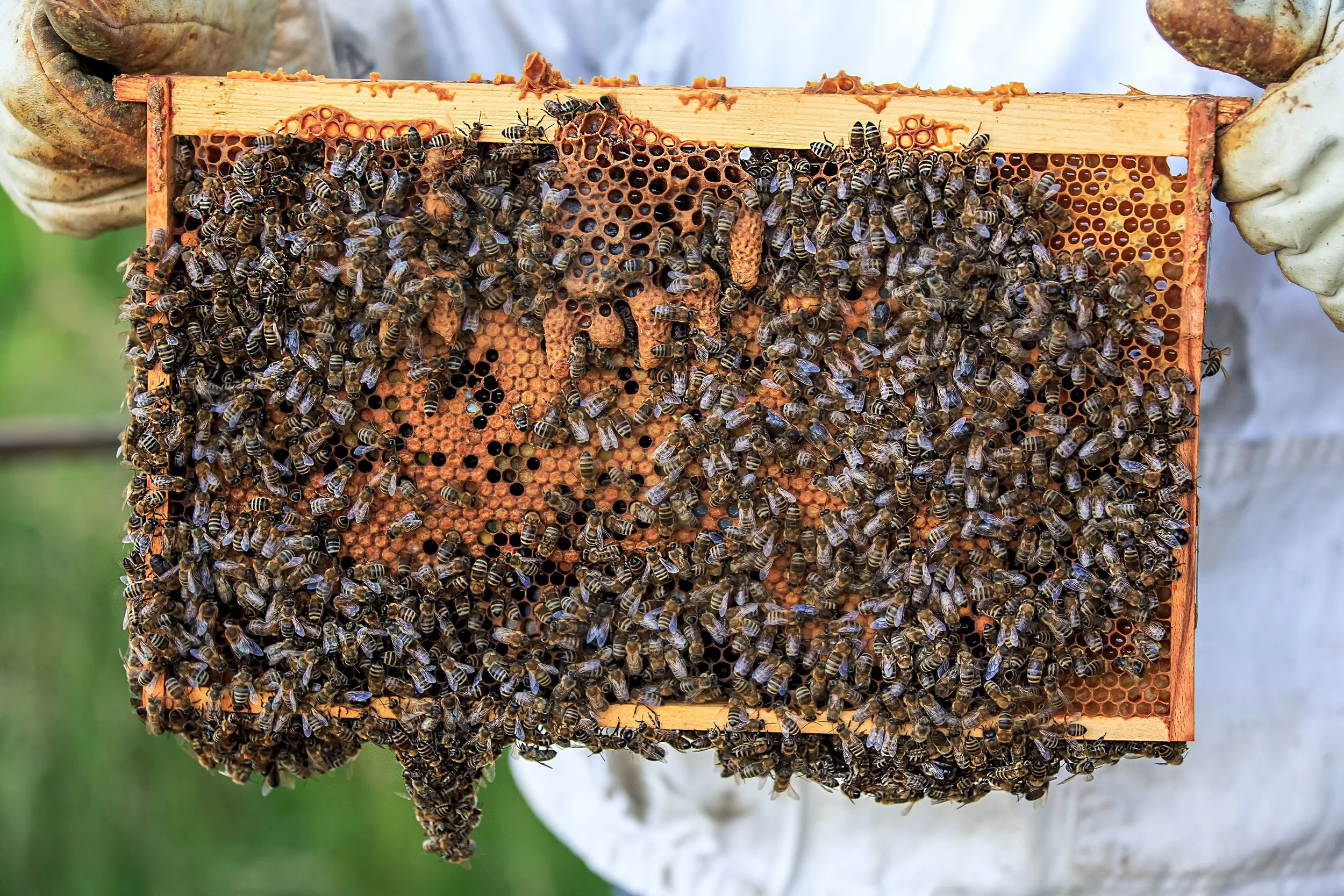
Once a frame is ready, it's pulled from the hive and taken through a simple, low-intervention extraction process. Nothing is added and nothing is stripped out. What ends up in the jar is what the bees made, filtered only enough to remove wax and debris before bottling.
Because the harvest depends entirely on the season, weather, and what's blooming that year, the honey itself changes a little year to year, the same way wine or maple syrup does. That variation isn't a flaw. It's part of what makes this honey distinctly tied to this one island in this one season.